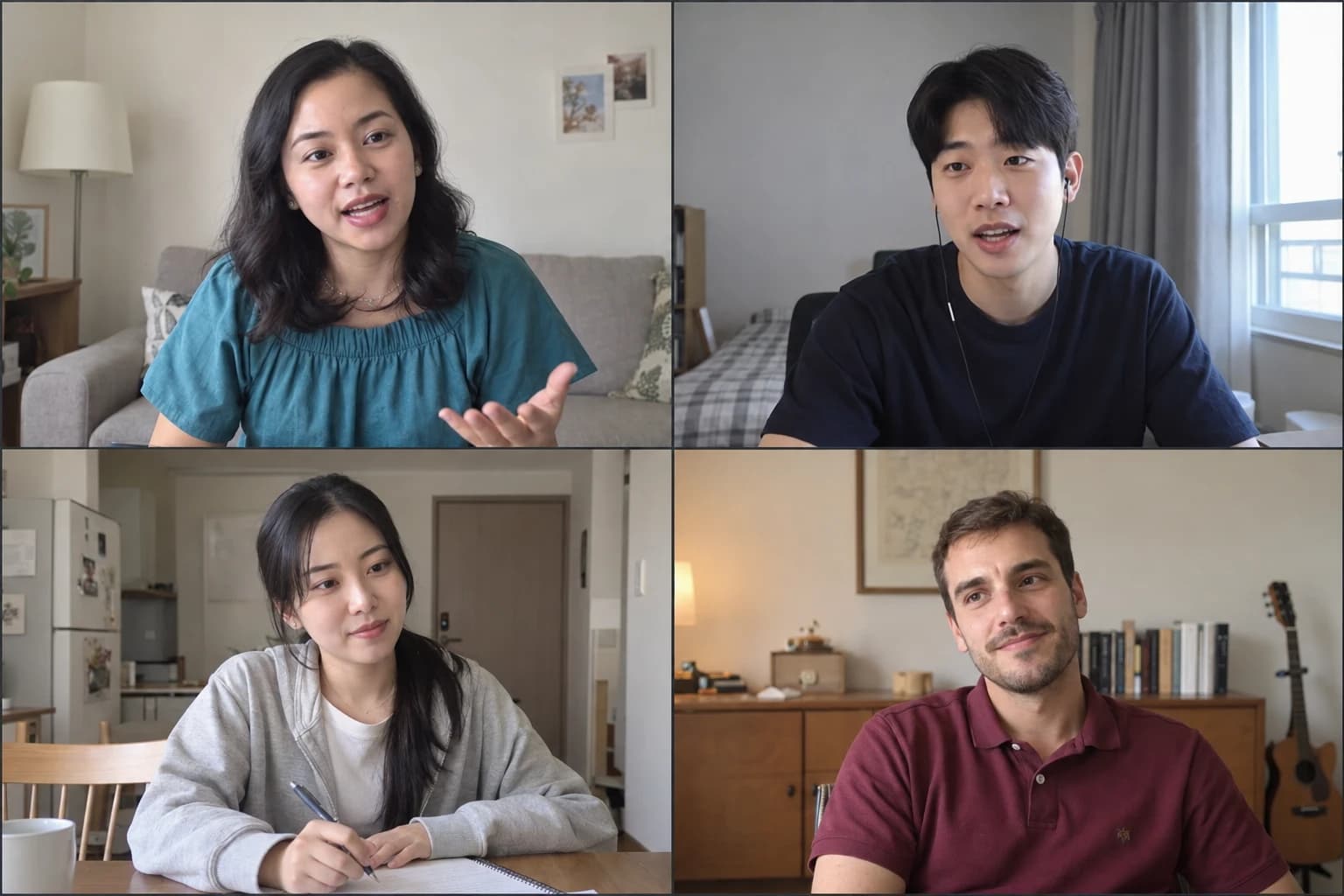
You can speak a little when it is just you and a teacher. But a class with several other students makes you hesitate.
What if everyone else speaks well? Will they mind waiting while I talk? If I do not understand the question, where do I begin asking for help?
If these worries feel familiar, “Be confident” may not be enough. Start by choosing a manageable first class and one small thing to try in it.
Your first class can cover a familiar topic
The most difficult-looking topic is not necessarily the most helpful. If both the English and the subject are unfamiliar, you may feel more pressure.
At first, look for something you would enjoy talking about in your own language too. Food, films and everyday choices can give you room to draw on your own experiences.
If the class involves watching a video or reading a text together, check whether any materials are available in advance. Instead of memorising all the content, prepare one opinion and one question. It is fine if you do not use exactly the sentence you prepared.
Join in with one sentence
You do not need to lead the discussion in your first class. Agreeing with someone, briefly adding a different experience or checking a question are all ways to take part.
Here are some expressions to practise.
“I agree, because …”
Add one reason why you agree.
“My experience was a little different.”
Begin by saying that your experience was different.
“Could you repeat the question?”
Ask to hear the question again.
Rather than planning everything you will say, start by learning an expression that helps you begin a conversation. It gives you a small starting point to build on when your turn comes.
Look beyond another student's fluency
They may know the topic well or have told a similar story many times. One moment is not enough to compare their whole English ability with yours.
Use other students' speech as material for practice rather than a way to judge yourself. Choose one thing you would like to try next time, such as checking a question or gently adding an opinion.
You can practise even when it is not your turn. Follow the other person's main point and think of a short question you would like to ask.
Check the cost and participation requirements in advance
When you are trying a new way to learn, the lesson fee may be part of your hesitation. If a free class is available, it can be one way to find out whether the format suits you.
Plazma English offers both free Group Classes and classes that require a lesson ticket. Not all Group Classes are free. Before booking, check who each class is for, its level and topic, and whether it is free.
A free class still comes with booking and attendance responsibilities. If you can no longer attend, follow the cancellation instructions for that class. This may give another student the opportunity to join.
Take one thing away after the class
Even if you did not say much at first, look at what you tried. Did you ask to hear a question again, add an opinion or find an expression to use next time? Make a note of it.
If you feel disappointed because you did not say anything, that feeling can help you prepare. Identify the moment when you wanted to speak and the first sentence you needed then.
If the class felt too difficult, you can try another topic or level, or ask the teacher for support. There are options between forcing yourself through it and putting it off until you feel good enough.
Your first goal does not have to be speaking better than everyone else. Start with the experience of sharing one thought of your own in a group.